Thursday, 28 March 2019

All Blue-Eyed People Have A Single Ancestor In Common

PHOTO: WALLPAPER

New research shows that all blue-eyed people share a common ancestor. This person lived more than 6,000 years ago and carried a genetic mutation that has now spread across the world.

The exact cause remains to be determined, but scientists do know that eye color began to change long before recorded history began. The following is a transcript of the video.

All blue-eyed people have one ancestor in common, born around 6,000 to 10,000 years ago. Blue eyes are caused by a gene mutation. For years, researchers had searched for it on the OCA2 gene. 

The OCA2 gene determines how much brown pigment is in our eyes. But what they were looking for wasn't there at all.

PHOTO: Makeup.com

The mutation was found on an entirely different gene called HERC2. HERC2 turns off OCA2, meaning it turns off the brown and reveals the blue. Every blue-eyed person has this exact same mutation.

How did this mutation get its start? Possibly when humans migrated from Africa to Europe. This would explain why only people of European descent have blue eyes. It would also suggest that all blue-eyed people share a single European ancestor.

Now, that's an impressive family tree!

SOURCE: Tech Insider

Tuesday, 26 March 2019

Lamborghini’s Latest Huracán Is A Supercar With A Supercomputer

PHOTO: LAMBORGHINI

Over the past few decades, technology has made vehicles safer and easier to drive. 

Anti-lock brakes, traction control, torque vectoring and other bits of tech keep cars on the road instead of flying into a ditch when things get hairy. It's why newer cars typically handle corners better than older cars.

At Lamborghini, they've taken things further with their new Lamborghini Dinamica Veicolo Integrata or LDVI system. 

The Engine Control Unit (ECU) takes data from the entire car and uses it to adjust how the new Huracán EVO Spyder drives in real time (actually in less than 20 milliseconds. 

But that's about as close as you can get to real time). Cars have been doing some form of this for a while but the Italian automaker needs to be able to do this at incredible speeds and in environments your typical sedan or SUV doesn't encounter.

With this technology, Lamborghini is able to take the raw power of an all-wheel-drive supercar with a V10 engine and 630 horsepower and tame it, just enough, so your average driver (who can shell out $287,400) can enjoy themselves behind the wheel of the all-wheel-steering vehicle without, you know, flying into a ditch.

To achieve this, the LVDI is actually a super fast central processing unit that takes in data about the road surface, the car's setup, the tires and how the driver is driving the vehicle. It then uses that info to control various aspects of the Huracan.

The system works in concert with the Lamborghini Piattaforma Inerziale (LPI) version 2.0 hardware sensors. This system uses gyroscopes and accelerometers located at the car's center of gravity. 

It measures the vehicle's movements and shares that data with the LVDI computer.

PHOTO: LAMBORGHINI

Lamborghini says the system is so in tune with all aspects of a drive that it can actually predict the best driving setup for the next moment. 


In other words, if you're behind the wheel flying around corners on a back road, the system will recognize your behavior as you enter a corner and adjust itself.

"Where it's possible to do a bigger jump in the future is with the intelligent use of four-wheel drive and four-wheel steering and the movement and control of the torque wheel by wheel in a way that can be more predictable and that is what we have with the Huracan EVO," said Maurizio Reggiani, chief technology officer of Automobili Lamborghini.

Lamborghini is thinking about a world beyond a completely gas-powered engine though -- it has a pipeline for hybrid and electric vehicles. 

But Reggiani notes that Lamborghini will probably be the last automaker to leave behind a large growling power plant.

PHOTO: LAMBORGHINI

Putting all that power to the ground in a controllable way requires an incredible amount of technology -- that's where LVDI and other pieces of technology come in. 

The automaker believes the result is a driving experience that matches exactly what the driver wants, regardless of the mode the car is in. Whether it be Strada, Sport, or the track ready Corsa, the vehicle (in a controlled way) should deliver.

That control allows a driver to do something that typically takes months if not years to master: drifting. It goes against what the car wants to do -- lose traction. 

But in Sport mode it's possible. To do that, the vehicle has to figure out (in real time and safely) things like what angle it wants to slide. The Huracán EVO Spyder has to understand that you want to drift and not fight that. If it does, it will jerk the car (and driver) back into alignment.

Lamborghini Huracan EVO Spyder

To relive your Fast and Furious dreams, the automaker started where lots of companies start with new technology: In the simulator. But a computer can't faithfully reproduce the real world. 

Mostly that has to do with tires, a variable that's tough to predict because of the density of the rubber's compound and its wear.

Then, of course, there's the driver. We all drive differently but the experience must be the same for everyone. It's important that even with all that technology, it's still a driving experience. 

"We don't want to have something that substitutes the driver. We want to have a car that is able to understand what the driver wants to do," Reggiani said.

Lamborghini is known for large engines, intense growls, striking design and bank-busting prices. But the reality is all that power would be useless if drivers couldn't actually control the car. 

The automaker's latest system makes that possible for everyone. Sure, only a select few can own a Lamborghini, but everyone can appreciate a system that makes driving safer while simultaneously more fun.

SOURCE: ENGADGET

You Can Soon Order Domino's Pizza From Your Car's Touchscreen

PHOTO: DOMINO

Domino's is continuing its quest to let you order pizza through every device imaginable. It's partnering with Xevo on an app that can order pies through your car's infotainment system, no tethered smartphone required. 

You can avoid distractions by placing an Easy Order or repeating your last order, and track your food's progress. 

There's also an option to make an order by phone in case you have a complex request or just prefer human contact.

The technology is expected to come pre-loaded on "millions" of cars sometime later in 2019, although Domino's and Xevo didn't name specific brands or models. Either way, this could be more useful than you might think.

 It's not uncommon to order pizza on the way home to save time -- this makes it simple enough that you could make a purchase in the time it takes to stop at a red light.

Source: Domino's Pizza

Sunday, 24 March 2019

Huawei Unveiled The P30 Pro Smartphone A Touch Early

PHOTO: HUAWEI

Huawei might know how to build photo-centric smartphones, but the concept of web pages is apparently beyond its grasp. 

As spotted by Evan Blass, it unveiled an event page for the phone that reveals pretty much everything you'd want to know ahead of its March 26th Paris Event. 

As expected, it'll have a quad camera array -- with the main packing a 40-megapixel sensor -- and 10X hybrid zoom, doubling the P20 Pro's 5X zoom.

There are some interesting new details, too. The P30 Pro (and P30 to a lesser extent) will have improved low-light capability, making them better for night shooting. They'll also pack a so-called dual-view video mode. 

That will show two of the four cameras at the same time in split-screen, letting you see both a close-up and wide-angle view. 

The feature could make it easier to track distant, fast moving subjects, or quickly switch between views like some kind of smartphone-toting television director. 

It's not clear whether you can record in the split format as well, however.

The page also unveiled the Huawei Watch GT Active edition, which will be offered for free to P30 Pro buyers at Huawei's Singapore event. It'll likely be a more sporty version of Huawei's Watch GT, which is powered (unfortuantely) by Huawei's own operating system, not Google's Wear OS. 

The P30 phones will be unveiled on Tuesday, March 26th in Paris, and Engadget will be there to cover the event -- the devices might be difficult to find in the US, however.

Source: Huawei (internet archive)

Wednesday, 20 March 2019

BMW’s Future EVs Could Outlast The Competition By 200 Miles

PHOTO: BMW

BMW has said that it wants to build all variants of its cars (hybrid, gas, electric) on the same production lines. So, a 3 Series with an internal combustion engine (ICE) will be built right beside one with a battery pack. 

It relies on the automaker being nimble and that means major changes to how BMW's EVs are built.

The powertrain will have the motor, single-speed transmission and controller all in one. It'll first appear in the totally electric iX3 which is scheduled to land in 2020. 

BMW says it'll allow the automaker to make adjustments on the fly and "to react quickly to whatever demand is out there," according to Jan Freimann, BMW manager of Connected eMobility.

"Everything is together in this highly integrated, compact module," Freimann said. The idea is that it'll be easy to place this into any vehicle in the future. 
It's compact enough to fit into a Mini (BMW is the parent company of Mini) but robust enough to power an SUV, Plus, it's completely built in-house by BMW so the automaker can make adjustments quickly to upgrade the system as the need arises.

What's interesting is that the motor housed in the unit will create electricity without rare-earth materials or magnets. 

Your typical electric motor uses magnets, BMW is going without. "it's a synchronous machine and you use (the) winding of copper to induce a current. That becomes the magnet," Freimann said.

BMW's is using the technology as partly a cost-cutting measure. "Rare earth magnets are expensive and there are issues around them. So the price fluctuates and [you] might as well create your own tech," Freimann said. 
Basically, batteries are still expensive, so if the automaker can reduce the cost of its vehicles elsewhere to bring EVs closer to pricing parity with ICE vehicles, that's good news for consumers. Plus, it allows BMW not to be dependent on third parties for the material.

But it'll take a more than an all-in-one-motor to win over potential customers. Charging as quickly as possible is becoming the one feature that customers are most interested in. 

After decades of filling up their cars with gasoline in only a few minutes, for many, it's a hard sell that they have to wait, sometimes hours, to recharge their vehicle. On that front, the automaker says its upcoming EVs will support charging up to 150kW.

That level of output could result in 15 and 20 minute recharges. Not as quick as a refuel, but a short enough period you could kill the time while you browse the mini-mart to buy some refreshments. 

Other automakers, like Audi, are also offering this sort of speed (155kW to be exact) while Tesla is the current leader, with its updated V3 Superchargers (with output up to 200kW).

BMW 5th Generation Powertrain

The batteries themselves will have a potential range of 420 miles (about 200 miles more than what others currently offer) Plus, BMW says that it'll be able to adjust the chemistry of its battery packs to fit the performance of a vehicle. 

A sports sedan would be tuned to give drivers the thrill of EV torque while a crossover might be tweaked to favor range over speed.

All of the EV tech that's going into these future cars is what BMW learned from its Formula E team. In fact, the folks working on the powertrain for the electric BMWs are the same people that built the electron-powered race car.

So while it seems like BMW hasn't done much EV-wise since the i8 and i3, the reality is the company is working towards building the internal infrastructure to make sure it can keep up with demand. 

Right now the automaker is working towards keeping its promise to customers as the "Ultimate Driving Machine" except with an electrified twist.

SOURCE: ENDGADGET

Tuesday, 19 March 2019

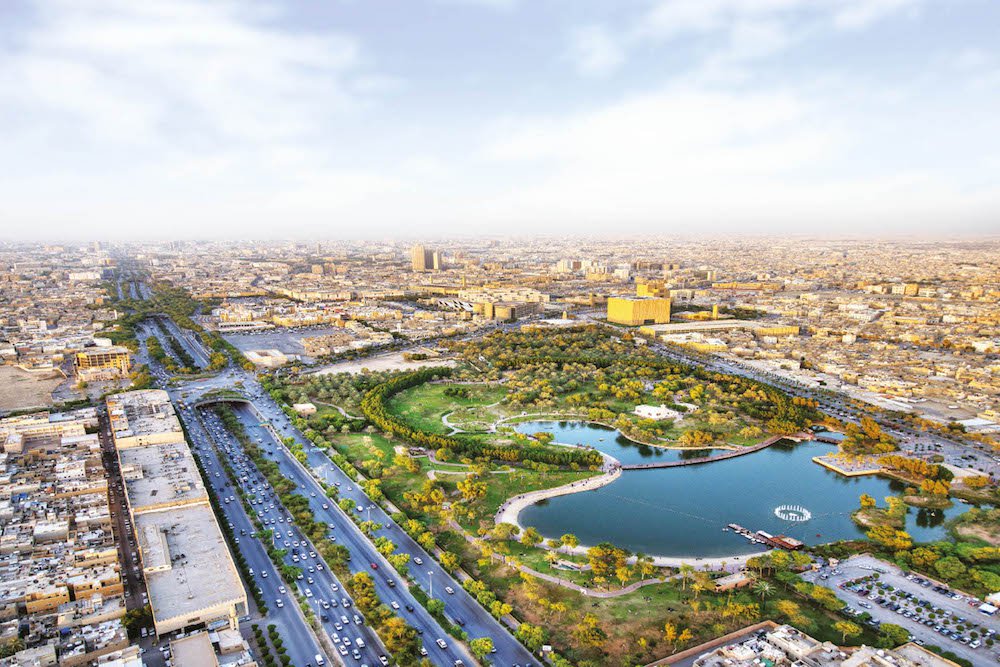
Saudi Capital To Get World’s biggest Park In $23bn Project

Photo: ARAB NEWS


- The project will see 7.5m trees planted and the creation of the world's biggest park

- There will be 70,000 jobs created across the four major projects

RIYADH: Saudi Arabia launched an ambitious $23 billion project on Tuesday (19 March) to create vast open green areas in the capital, Riyadh, including the world’s biggest city park.

Construction will begin this year on four schemes — King Salman Park, Sports Boulevard, Green Riyadh and Riyadh Art — which will create sustainable communities, drive action against climate change and provide up to 70,000 new jobs.

The aim of the project is to “significantly improve the lives of its citizens, transform the city into an attractive destination and make it one of the world’s most livable cities,” the government said.

The four projects - King Salman Park, Sports Boulevard, Green Riyadh and Riyadh Art – will complement the Saudi Vision 2030’s “Quality of Life” Program and are aligned with the UN Sustainable Development Goals, to create sustainable cities and communities, while driving urgent action against climate change.

Developed with a government investment of $23 billion, the four projects will offer opportunities worth $15bn for the private sector to invest in residential, commercial, recreational and wellness projects.

As well as creating tens of thousands of new jobs, the project will also help boost efforts to improve the city’s health and wellbeing with a commitment to wellness, health, sports, culture and the arts, underpinned by a commitment to environmental sustainability.

The project will transform the environment and make Riyadh a more sustainable city, Dr. Fatma Alaish, assistant professor of ecology and environmental pollution at Jeddah University’s biology/botany department, told Arab News.

“Planting cities reduces air pollution as plants undergo photosynthesis and absorb carbon dioxide gas,” she said.

“This will decrease the amount of carbon dioxide in the air, a poisonous gas that negatively affects air quality, mixed with dangerous car emissions, and heavily contributes to global warming.  With more planted green areas, there will be less pollution. 

SOURCE: ARAB NEWS

“The more you plant, the better the weather, the cleaner the air and the more sustainable life will be in cities.”

Measuring 13.4 square kilometers, King Salman Park will be the world’s biggest park, with residential areas, hotels, and will also feature a Royal Arts Complex, theaters, museums, cinemas, sports venues, water features, restaurants and an 18-hole Royal Golf Course.

The park will also boast several landmark assets, including the Riyadh Fountains and a Vertical Garden. As an environmentally sustainable urban development, it will offer opportunities for the international community in arts, entertainment and culture.

One of the world’s largest urban greening projects, Green Riyadh will increase Riyadh’s green cover with 7.5 million trees.

SOURCE: ARAB NEWS

The massive planting project will help increase the city’s green cover from 1.5 percent of Riyadh’s total area to 9.1 percent – that is approximately 541 square kilometers by 2030.


Salem Alghamdi, a professor at the College of Food and Agricultural Sciences, King Saud University, said the projects would make Riyadh “one of the greatest capital cities in the Middle East.”

“I believe now in Riyadh we are really having a new city,” he said, “with the Riyadh metro, the Qiddiya project and now this Green Riyadh project, these will add even more value.”

Green space availability will increase to 28 square meters per capita from the current 1.7 square meters per capita, compared to the World Health Organization’s recommendation of 9 square meters per capita.

Green Riyadh will help reduce average ambient temperature by 2C, and will use more than 1 million cubic meters of treated sewage daily for irrigation, for the sustainability of water resources in the city.

Sports Boulevard  - a health and wellness destination in the heart of the city- will feature a 135 kilometer-long professional cycling track covering the city and the surrounding valleys, the first of its kind in the region.

Adding 3.5 million square meters of new open space across the city, this grand project will also feature a sports pavilion, riding stables and athletics tracks.

Riyadh Art will be the world’s largest government investment in public art and will establish the city as “a gallery without walls” through a world-class interactive public arts program.

With 1,000 artworks curated through 10 separate programs and an annual arts festival, this project will feature large-scale art works with the aim of drawing art lovers and creators from around the world.

Construction work is due to start in the second half of 2019.

SOURCE: ARAB NEWS

Arcimoto's Latest Three-Wheeled EV Is Designed For Deliveries

Source: Arcimoto

You might remember Arcimoto as the company behind the "Fun Utility Vehicle" (FUV) -- a three-wheeled, electric vehicle that's scheduled to hit the streets in Oregon, California and Washington this summer. 

With the FUV underway, Arcimoto has opened presales for a similar vehicle with a new concept. 

Called the "Deliverator," it's a three-wheel, pure electric vehicle meant for local deliveries.

Like Arcimoto's FUV, the Deliverator is something between a car and a motorcycle. It will get around 100 city miles per charge, and it will top out at 75 mph -- just like the FUV.

 And it will start at $19,900, which you might have guessed, is the cost of the first edition FUV.

But, the Deliverator will also have a 350-pound carrying capacity and more than 20 cubic feet of cargo space, which can be customized to carry anything from parcels to pizza, groceries, pharmaceuticals and dry cleaning. 

The company hopes it will be an efficient alternative to delivery vans and trucks that's easier to maneuver around cities.

This is Arcimoto's third electric vehicle. It has another (again, very similar) model developed for emergency responders. 

That makes the Deliverator seem more like Arcimoto trying to get as many uses out of one concept than something totally novel, but if it's a green way to get your pizza faster, it can't be all bad. 

While Arcimoto has opened pre-orders, production won't start until 2020, so it will be a while before we see these guys out on the streets.

Source: Arcimoto/ ENDGADGET

Counter-Strike’ players are faster decision-makers, study shows

By : Mohd Ezli Mashut   Key Points - Research suggests that experienced Counter-Strike players make decisions faster, with a study showing t...